
For details of our earlier meetings please visit the Past Talks and Past Visits pages.
September
Oxford River Trip with commentary by historian & author Mark Davies
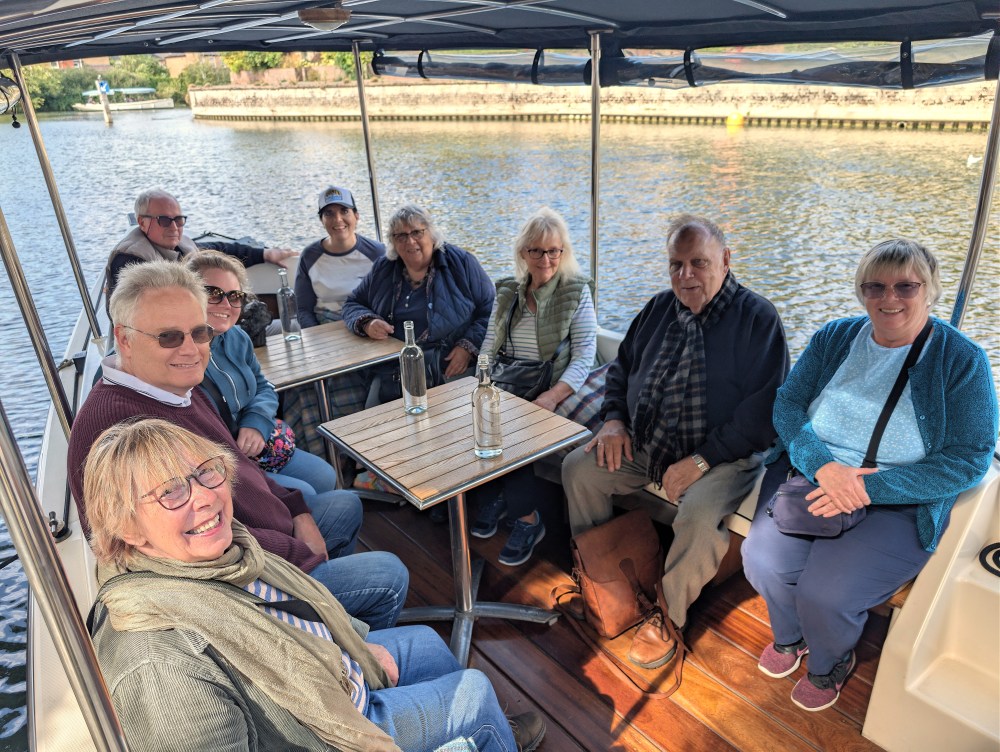
Originally scheduled in June and cancelled because of the heatwave, the long-awaited Oxford River Trip took place this month attended by a small party of History Group members.
We arrived at Oxford River Cruises pier next to Folly Bridge, and just after midday embarked on a small tour boat with the local historian and author Mark Davies and a well-informed young captain, William, skippering the boat.
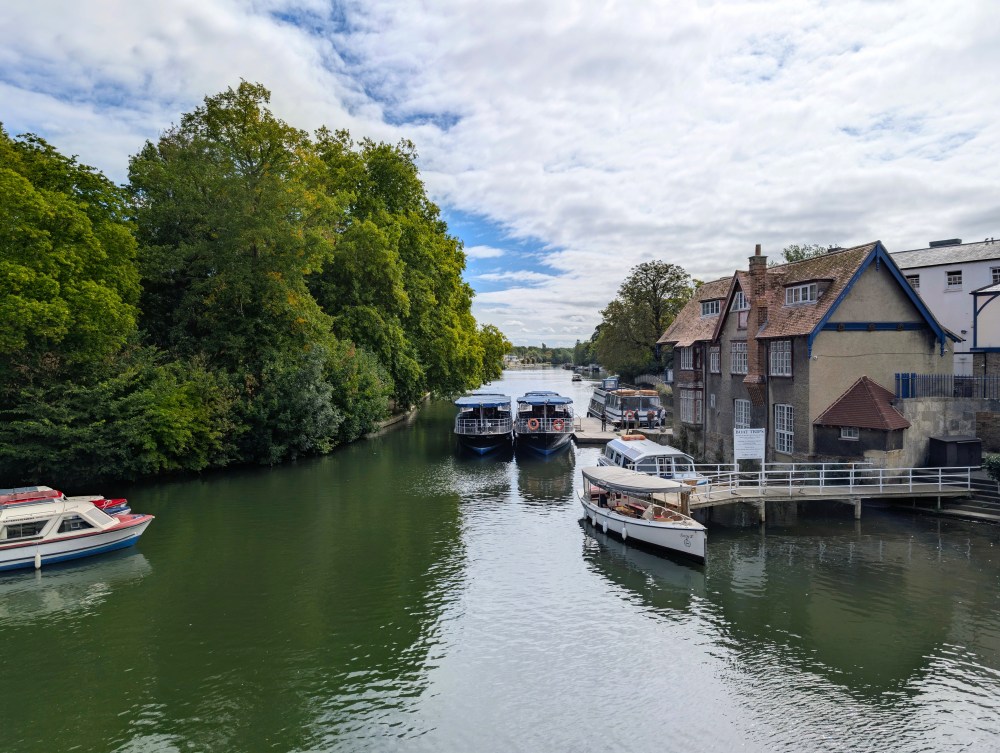
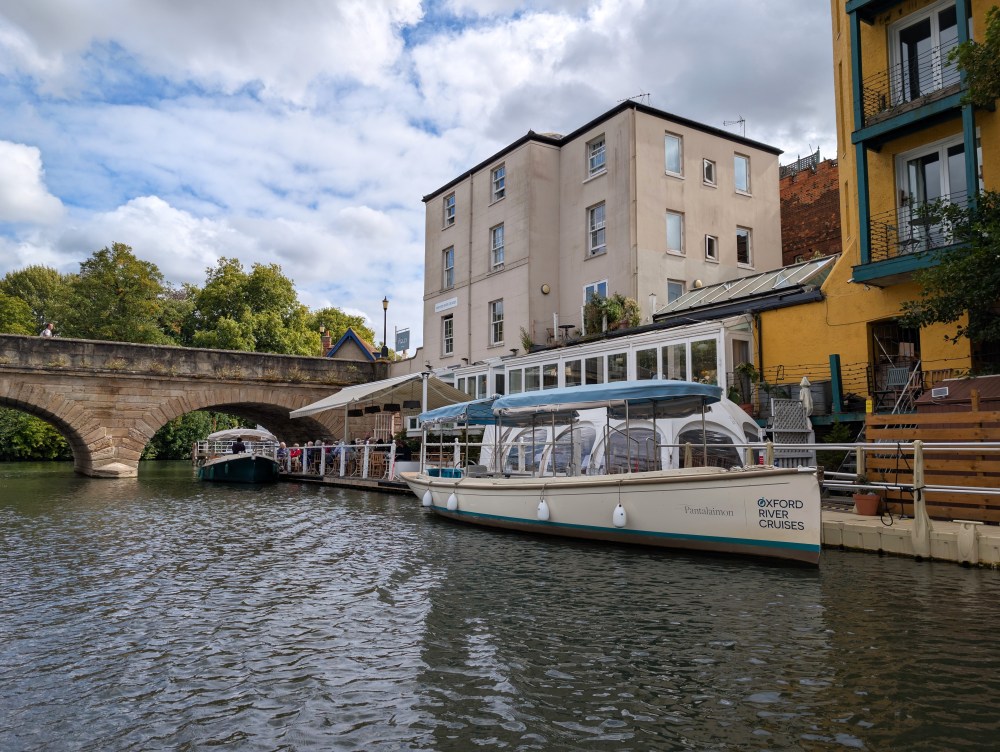
We started down the river towards Iffley, passing Christchurch Meadows, the many Oxford Colleges’ boathouses and the point where the river Cherwell joins the Thames. Just before arriving at Iffley Lock, we turned around to head back up the river.
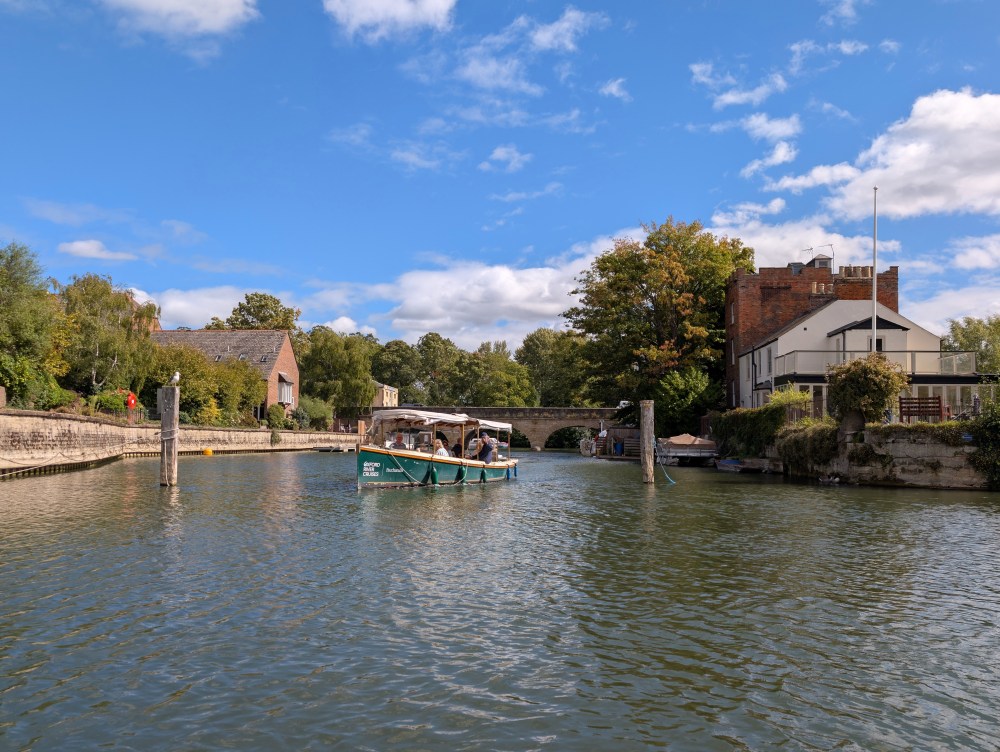
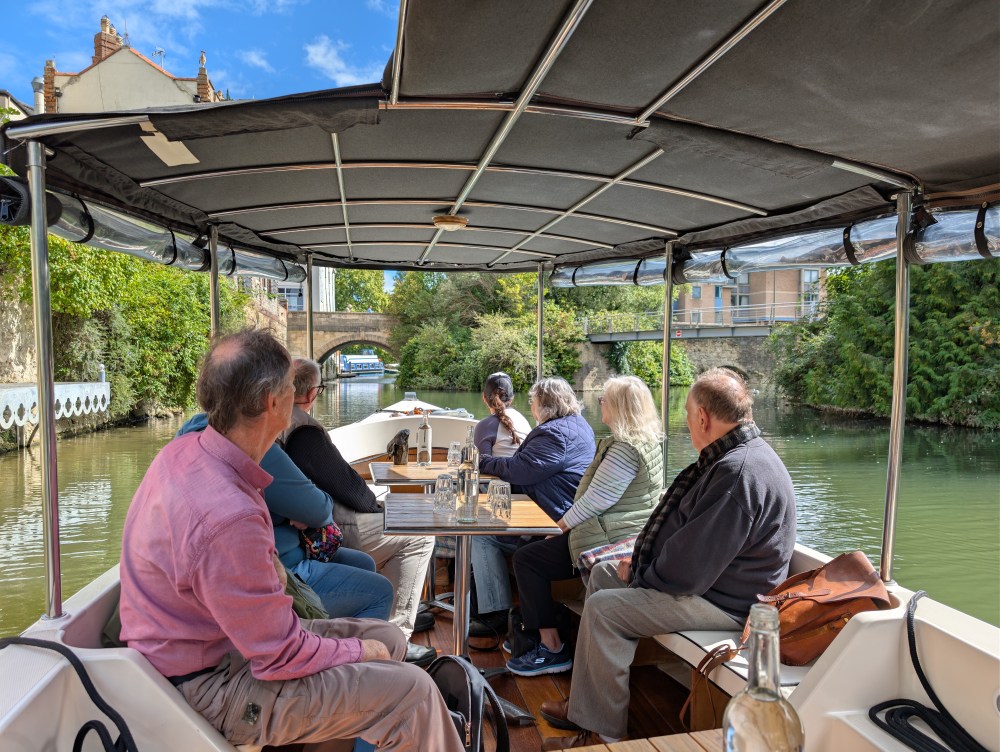
After passing under Folly Bridge again we then journeyed up the river, going by Grandpont Nature Park, Oxpens Meadow and underneath the railway line. After arriving at Osney lock we had a delay queuing up at the lock, alongside three narrowboats; technical problems with the lock were eventually resolved when the lock keeper returned from lunch, much to the relief of our boat’s captain! For us it all added to the experience and enjoyment of being up close with other river users and watching the geese around us.
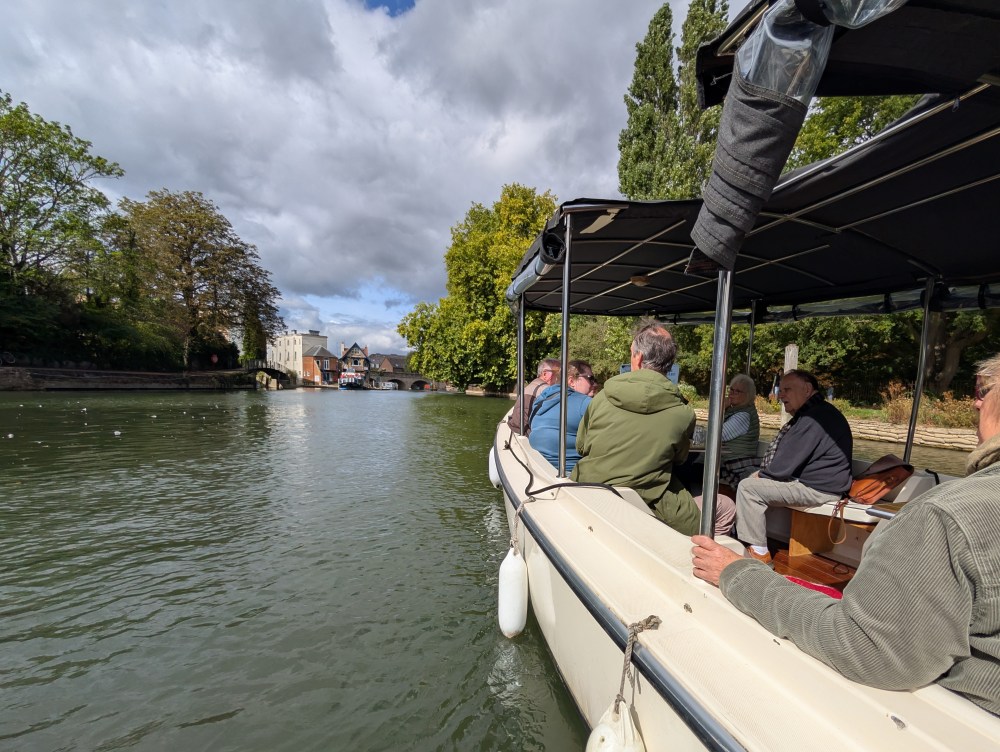
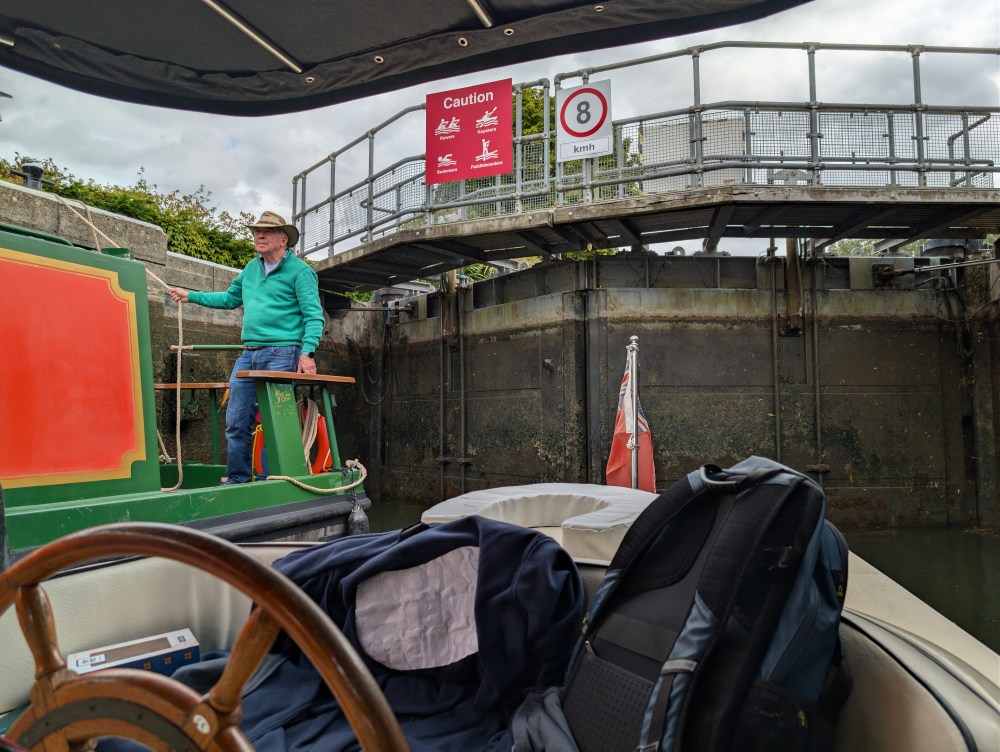
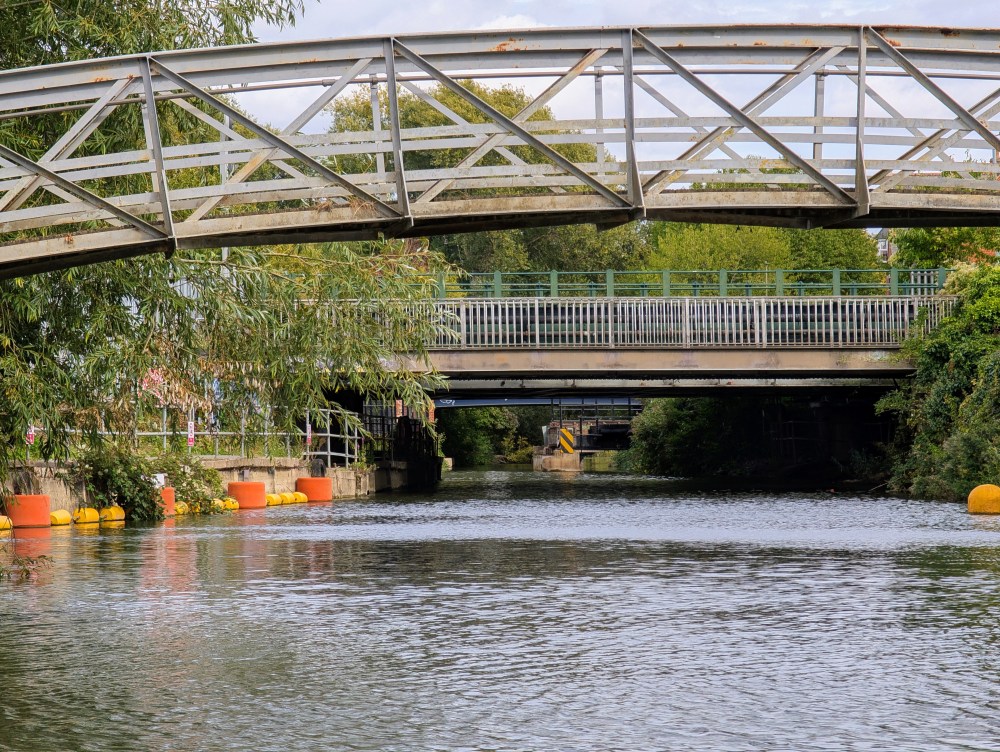
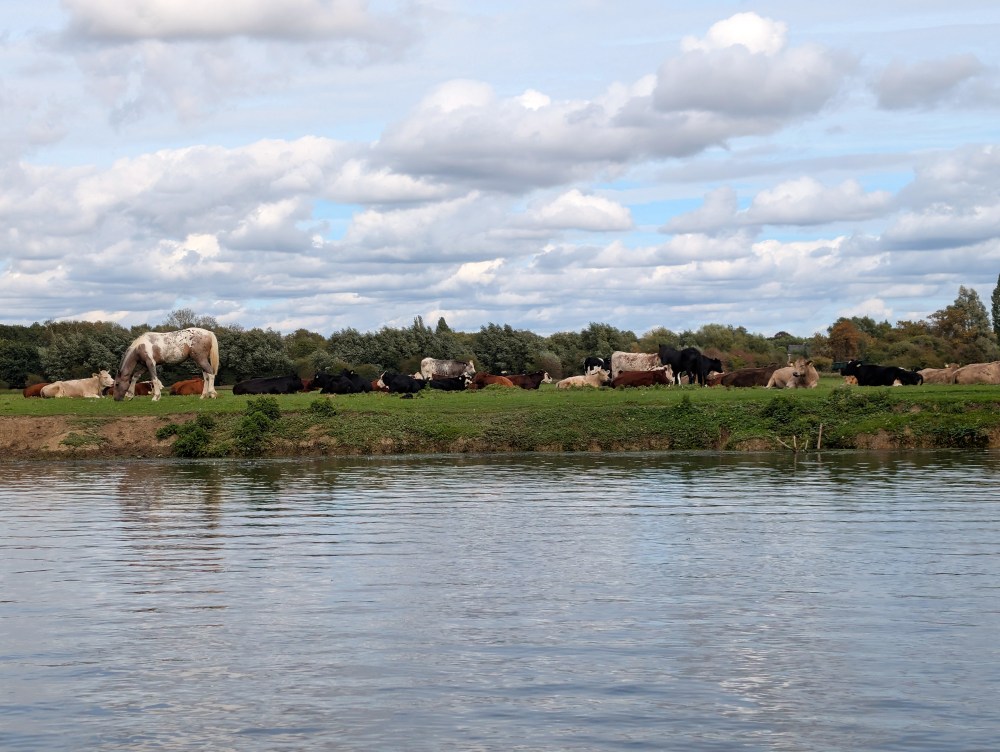
After this short hiatus we passed by the attractive East Street Victorian terraces and the charmingly named Twenty Pound Meadow Allotments which back on to the river. We then took a short detour up the narrow Sheepwash Channel towards the Castle Mill Stream and Oxford Canal passing by the recently restored Rewley Road Railway Swing Bridge before turning back to the main river. Continuing north, passing by Binsey we reached the open countryside to the west of Oxford and the open views of Port Meadow still being used as common land for grazing horses and cattle. Turning back just before Godstow lock and arriving back at Folly Bridge after a fascinating three hour trip covering over 8 miles.
Mark Davies illuminated our trip with many interesting historical insights about the landmarks and buildings we saw on the way – bringing his own knowledge and research on Alice in Wonderland, its creator Charles Dodgson (Lewis Carroll) and the places along the river which inspired his writings. Also telling as about Chaucer’s The Miller’s Tale, a famous and bawdy story set in the heart of medieval Oxford around Osney.
For more information, Mark’s book Alice in Waterland provides further understanding about the role of Oxford’s waterways and their influence on Lewis Carroll. A copy is available in the History Group’s library for members to borrow.
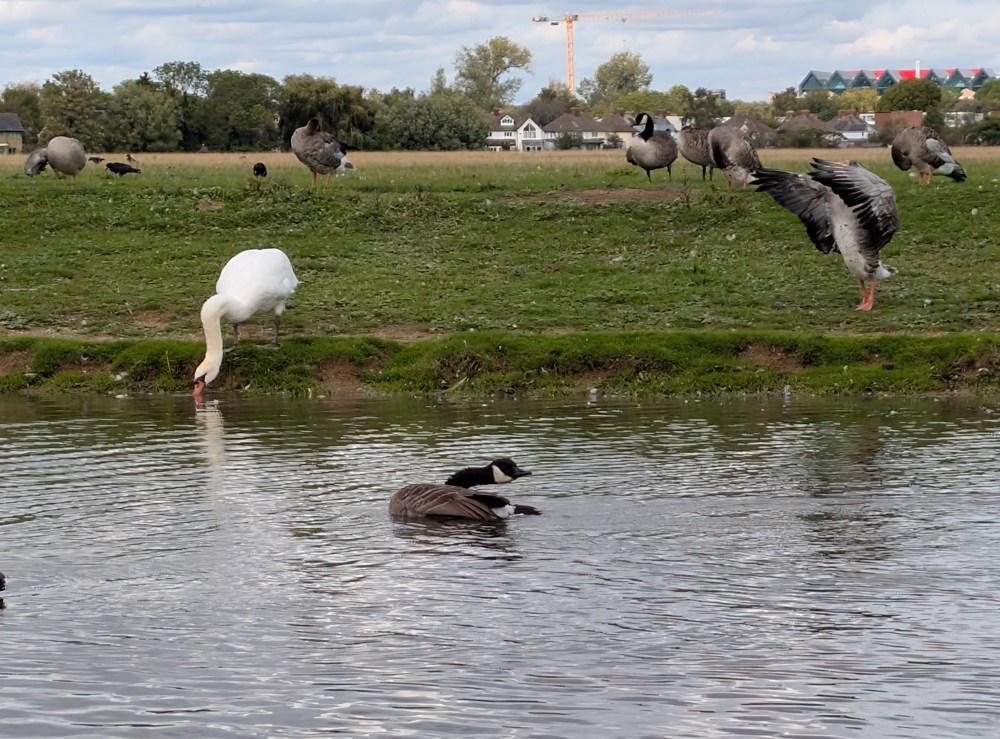
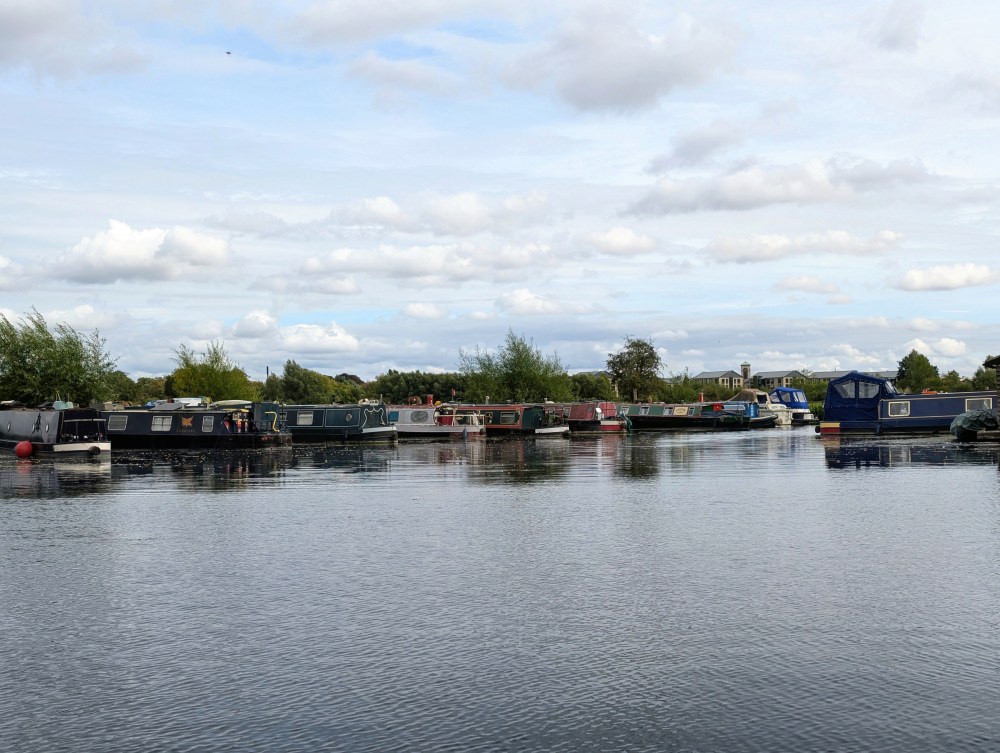
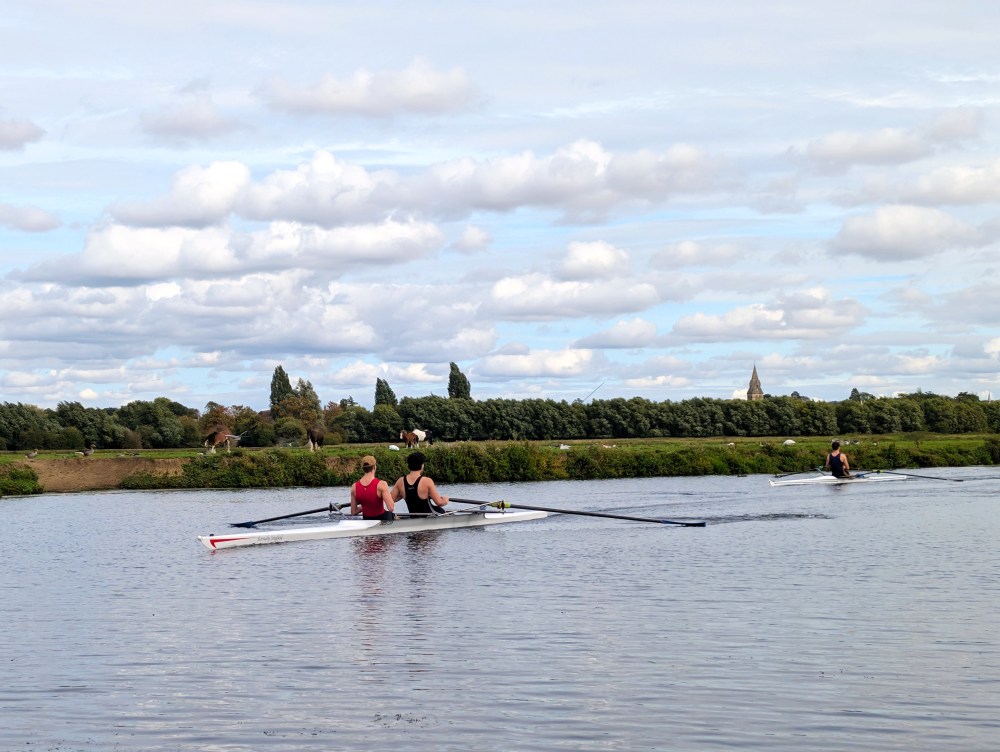
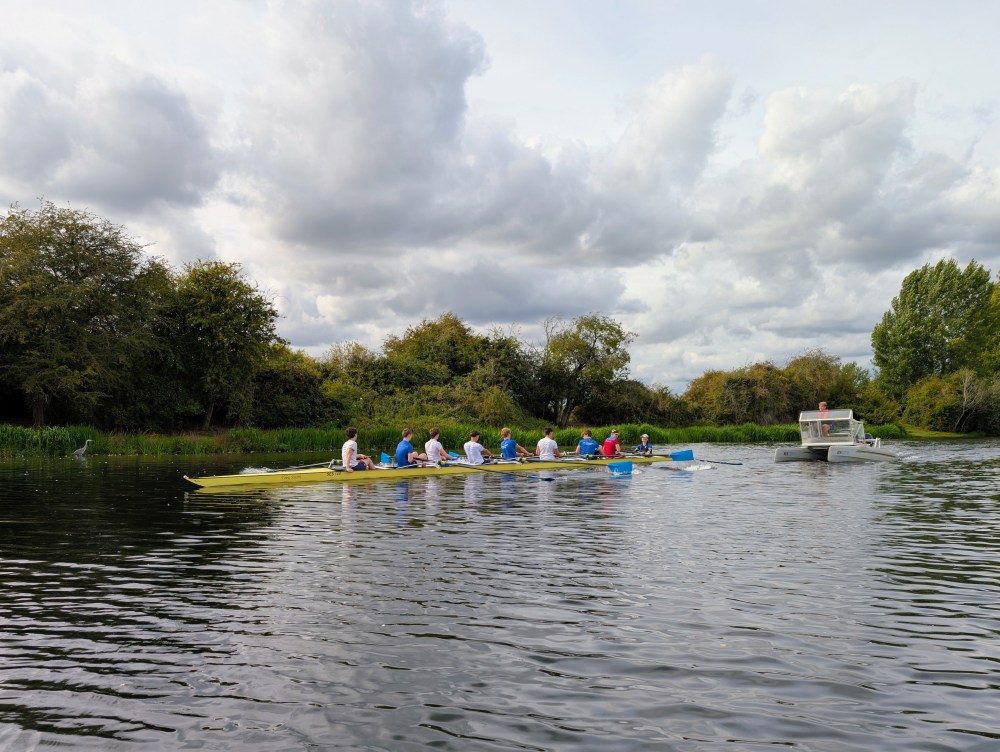
Our journey was so quiet and peaceful with parks, meadows and countryside surrounding us it was hard to imagine we were travelling through such a busy and bustling city. During the trip we saw much river wildlife including herons, Canada geese, a kingfisher, cormorants and other water birds. We also enjoyed seeing rowing sculls and eights training on the river together with many houseboats in varying states of repair moored along the river.
It was a thoroughly enjoyable day.
August
Trip to Bletchley Park
On one of the few days this summer when the sun wasn’t beating down – rain and storms were actually forecast, 20 members of the history group gallantly travelled to Bletchley Park in Buckinghamshire.
We were not disappointed as it was a fascinating trip and fortunately the weather remained fine for the visit.
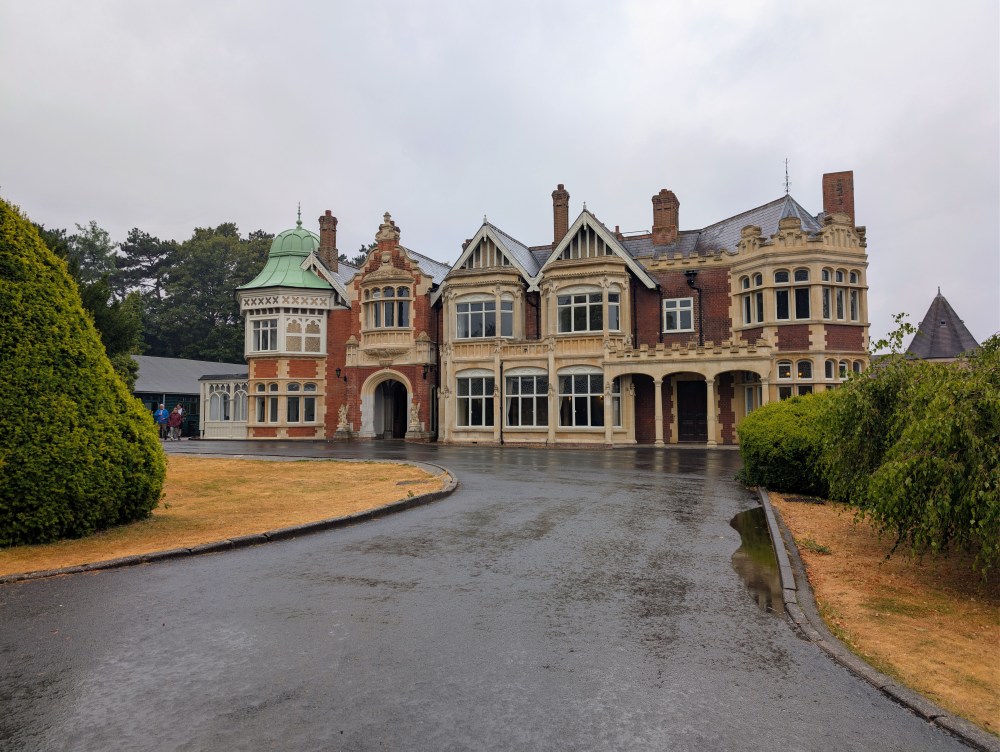
Bletchley Park holds a unique place in the history of the UK, it was the place where a collection of brilliant minds with a wide range of academic knowledge and skills (such as classics, languages, mathematics, and engineering) were brought together and tasked with breaking the codes of intercepted enemy messages during World War Two. Their successful and top secret work provided valuable intelligence which enabled the allies to successfully win the war and in so doing altered the course of history. At its peak the staff working at and supporting Bletchley’s work numbered nearly 9,000, including the code-breakers, cryptographers, translators and engineers together with a vast team of auxillary staff. Although the site moved elsewhere after the war to Eastcote and then GCHQ in Cheltenham; the advances made at Bletchley in cryptographic, computing, pioneering technology and intelligence processes lasted well beyond the wartime years, and remained shrouded in secrecy until the 1990s when the site was preserved by the Bletchley Park Trust.
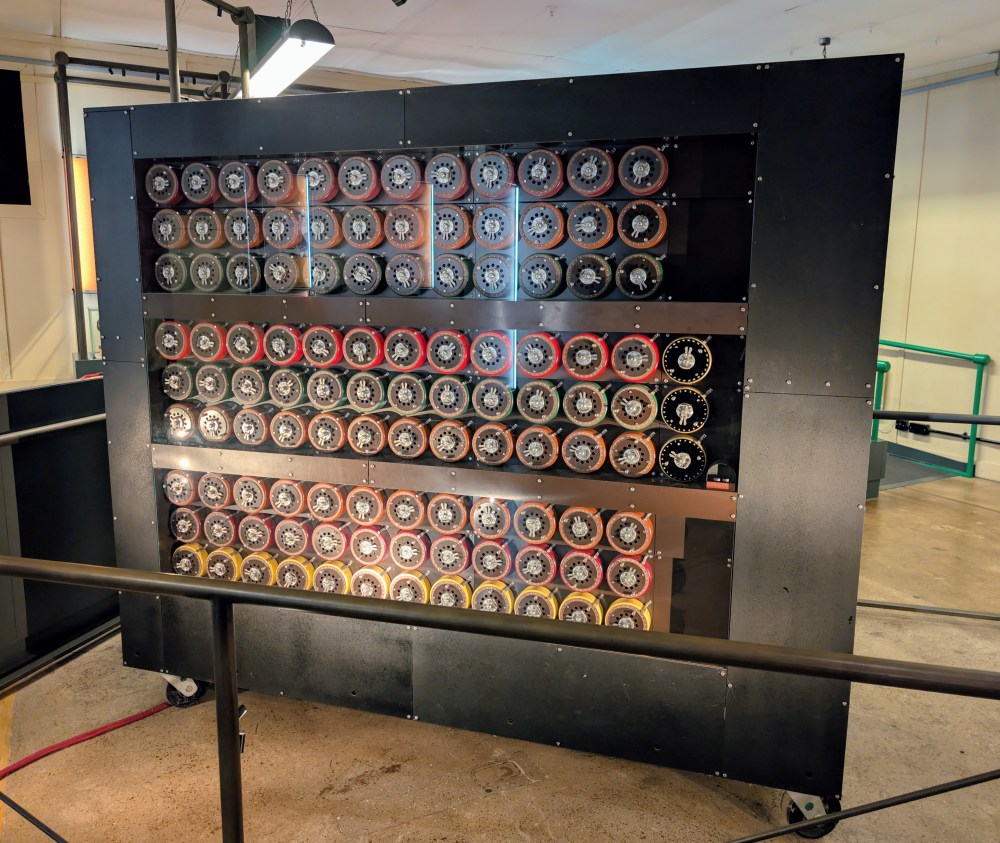
The manor house and the surrounding huts and buildings from the period have been preserved and restored to enable visitors to explore and understand the history of Bletchley; with thousands of artefacts and exhibitions bringing the world of the 1940’s wartime work vividly to life. Including a number of original Enigma machines, and the Bombe (early computer) machines developed by Alan Turing and Gordon Welchman, as well as more ordinary everyday items like bakelite ashtrays and clothing which helped bring the period to life.
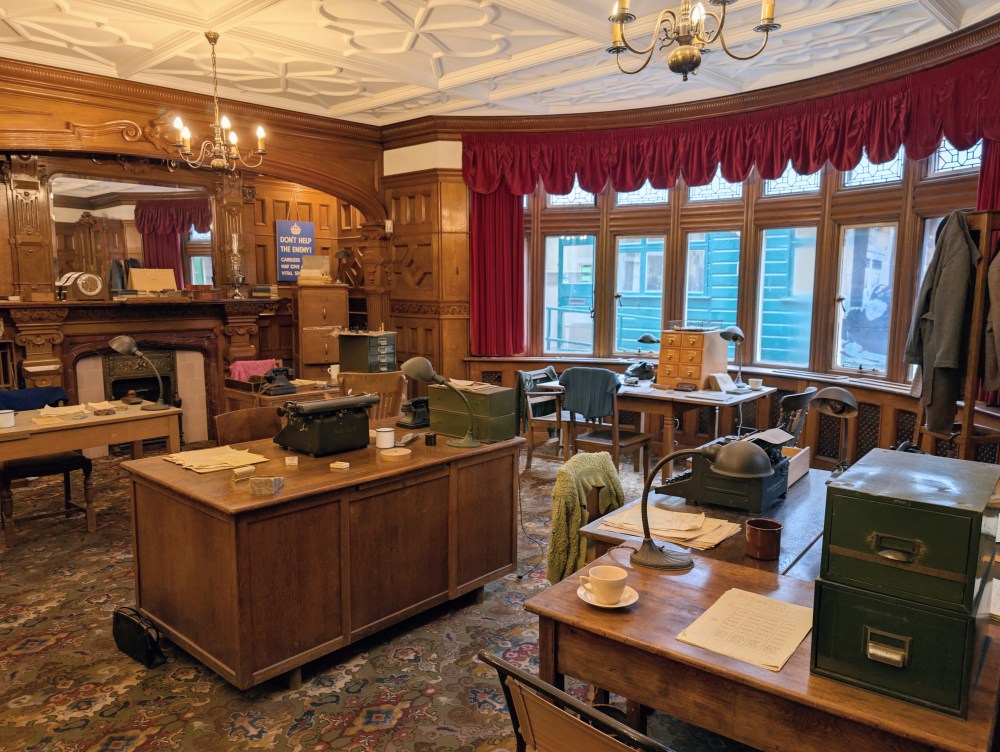
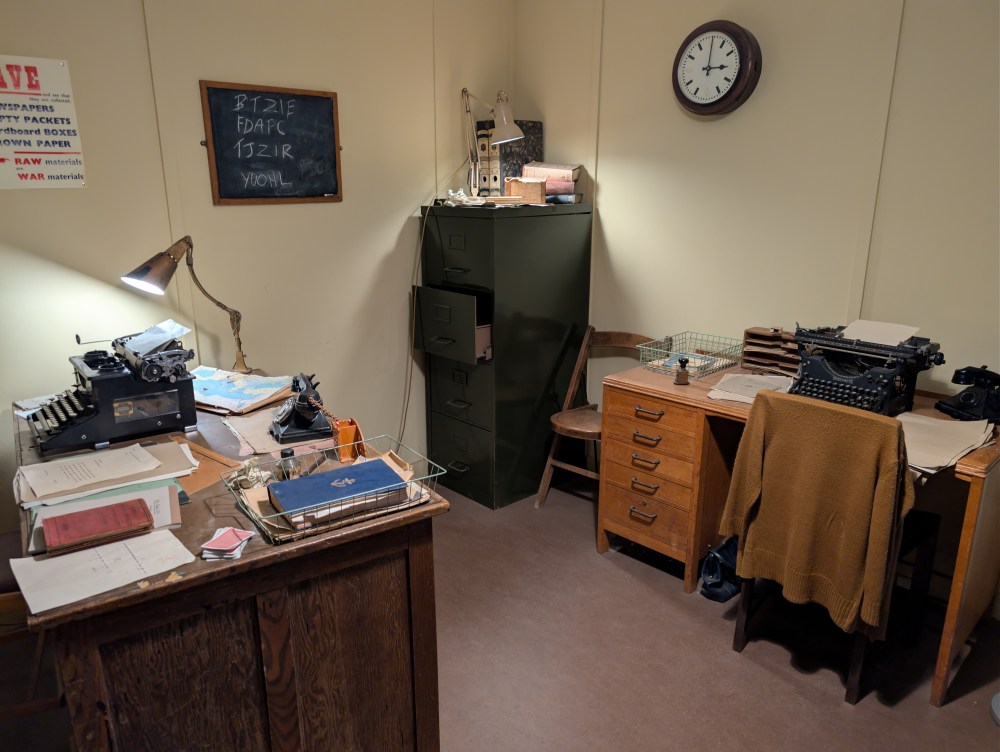
Included in the admission price was a guided tour of the grounds and buildings lead by a very knowledgeable and engaging guide. He explained why Bletchley Park was secretly acquired before the war in 1938 by the Head of MI6, its location being seen as ideal as far enough away from London to avoid the risk of bombing, located between Oxford and Cambridge to be accessible to the academic experts, near a train station, and in close proximity to a telecommunications hub.
Group members enjoyed very welcome refreshments available in the cafés on site, before undertaking the journey home in the long-awaited thunder storms and heavy rain.
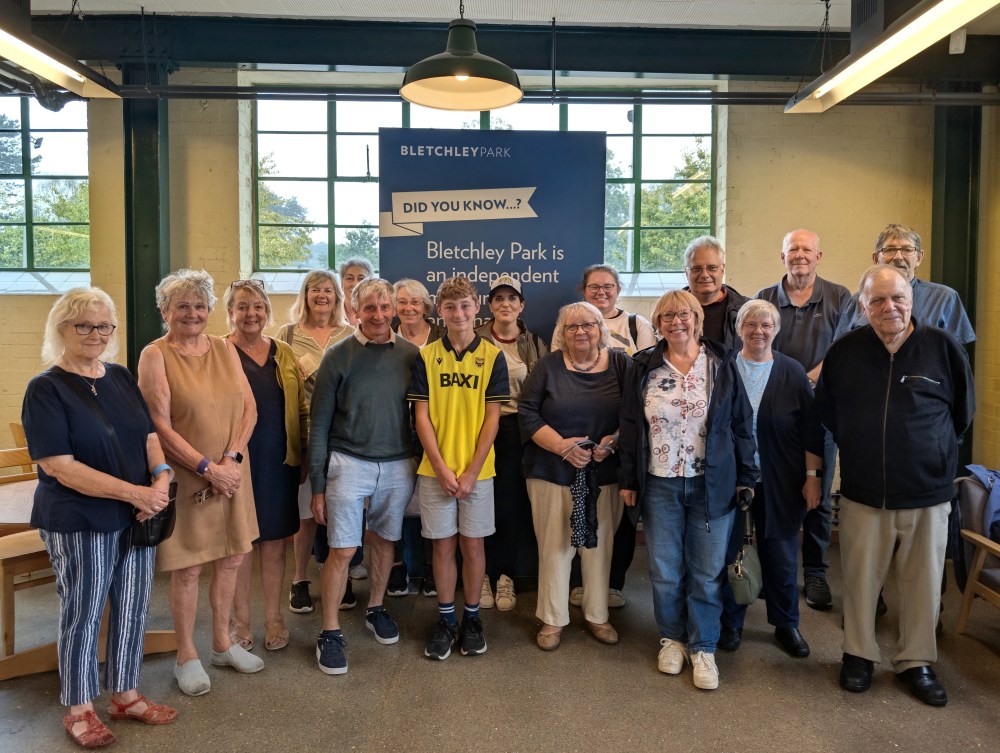
Bletchley is well worth a visit and our tickets enable us to return anytime over the next year.
July
Wells, Waste and Water by Alistair Wray
This month’s talk was given by Alistair Wray on the topical subject of ‘Wells, Waste and Water’. The talk was based on research centred on the Bampton area, which has also been published as a book.
The talk highlighted the development of the water supply in our area from wells to mains water. The other side of the coin was the disposal of waste from a privy at the bottom of the garden to a sewerage system with treatment plants.
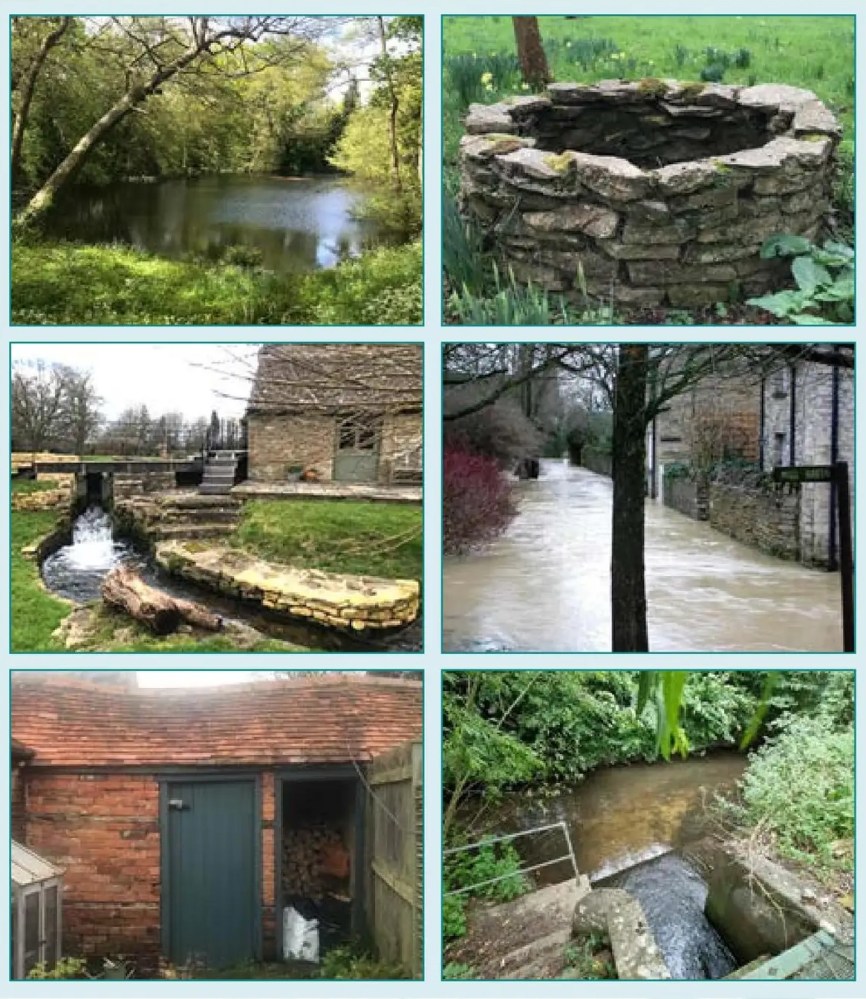
Alistair explained that the very flat landscape around Aston created significant drainage problems, affecting both floodwater and wastewater. Mains drainage was not introduced to Aston until 1967. In order to transport wastewater from Aston to the treatment works at Bampton, a number of pumping stations were required. These can be found in Bampton Road, North Street and Bull Street, with a further two located at Cote.
The detailed analysis of the current problems facing our water system was both illuminating and, at times, concerning. However, from a historical perspective, it also got the History Group, thinking. Where exactly were the wells located within our parish? This question has sparked a new research project. Some news on this will follow in the autumn.
April
AGM and the History of the Aston Band by Andrew Long
This month we held our Annual General Meeting. The chairman, Andrew Long gave a short summary of the group’s activities during the past year including: talks by speakers; visits to Compton Verney, Shifford Church & North Leigh Roman Villa; transcription of probate inventories; and the launch of the group’s website. The AGM included an update on the financial status of the group and election of the committee and officers.
Once the formalities had taken place, Andrew gave a very interesting talk about the Aston Band, based on the information which had been uncovered by researching in local newspaper archives, photographs and papers in the History group’s own archives and a memoir written by a former resident of the village.
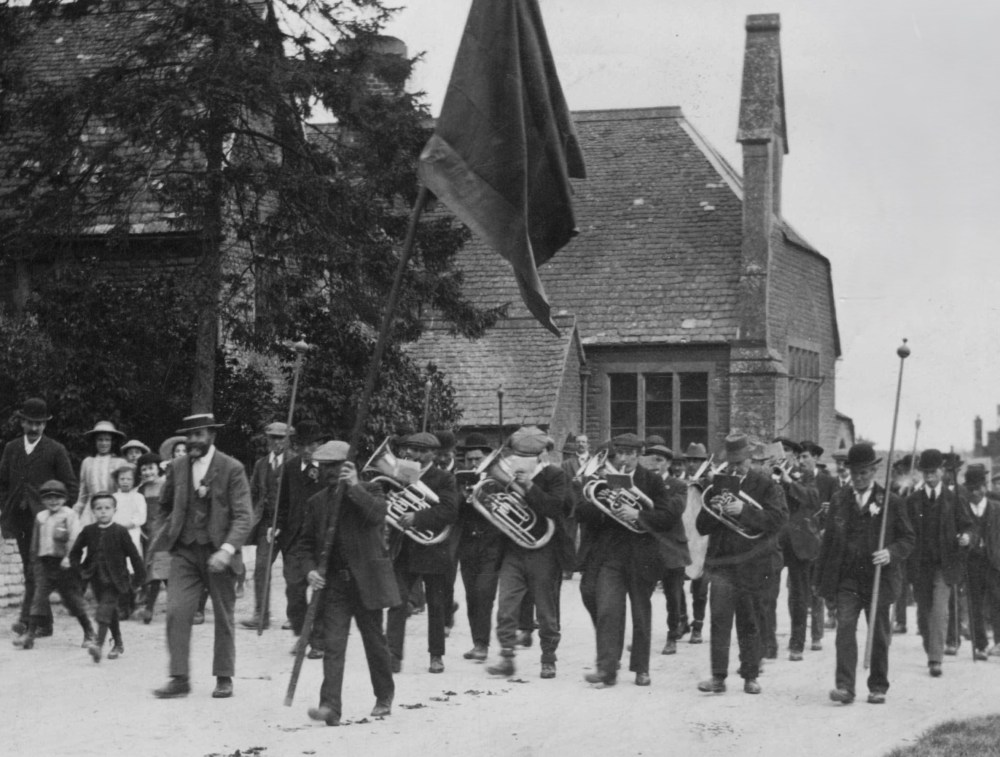
The first reference to the Aston Band was in 1838, when it took part in the grand procession through the village when the foundation stone for St James’ Church was laid.
Village Brass Bands were linked to local Friendly Societies. Aston, like many other villages, had several Friendly Societies; these were mutually supportive groups where a payment of a subscription by members gave insurance against such issues as loss of wages through sickness and the funeral costs. They held meetings in the local public houses, as well as the school. A major event in the calendar was Club Day – when the Aston Band would form part of the parade through the village.
In the nineteenth & early twentieth centuries regular feasts, shows, fairs, and club days, as well as Coronations & Jubilees would feature the Aston Band playing to enliven the events. The band would also visit other villages to play. An 1883 article in the Witney Gazette reported on the arrival of St James’ Church bells at Bampton station being met by the Aston Brass Band before the bells were transported in 3 wagons to Aston.
After the First World War, Club Day and the Aston Brass Band didn’t start-up again.
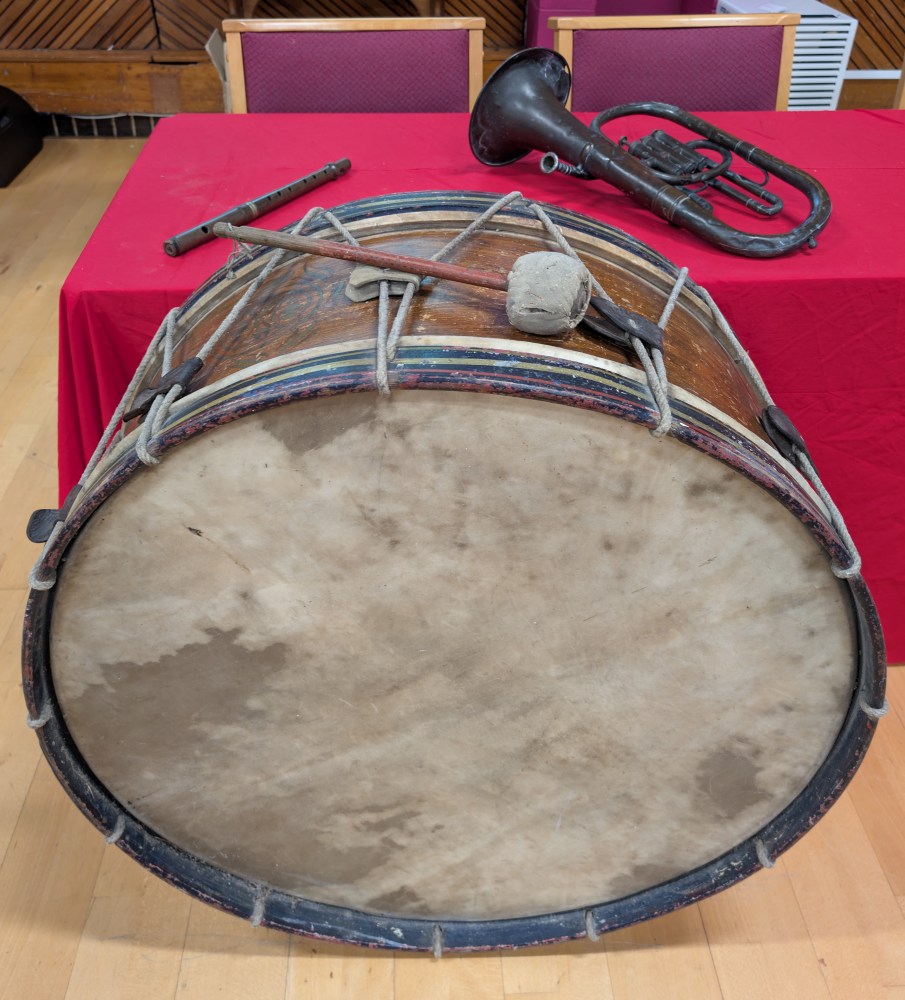
The audience was spellbound by Andrew’s tale about the Band’s missing drum, and was saddened to learn that over the years it was thought to have been long-lost. Until he surprised us all by appearing from behind a screen playing on the very large drum! Fortunately it had been rediscovered in an outhouse at Penny Black House.
Following the meeting there was an opportunity to visit the History Group’s archive room in the Fellowship Centre and to enjoy some refreshments.
March
The Early Family and the Witney Blanket Industry by Jonathan Smith
Our March talk by Jonathan Smith was about the Witney blanket industry, and the Early & Smith factories in the town. Jonathan is a son of the last manager of Smiths and gave us a most interesting and informative presentation.
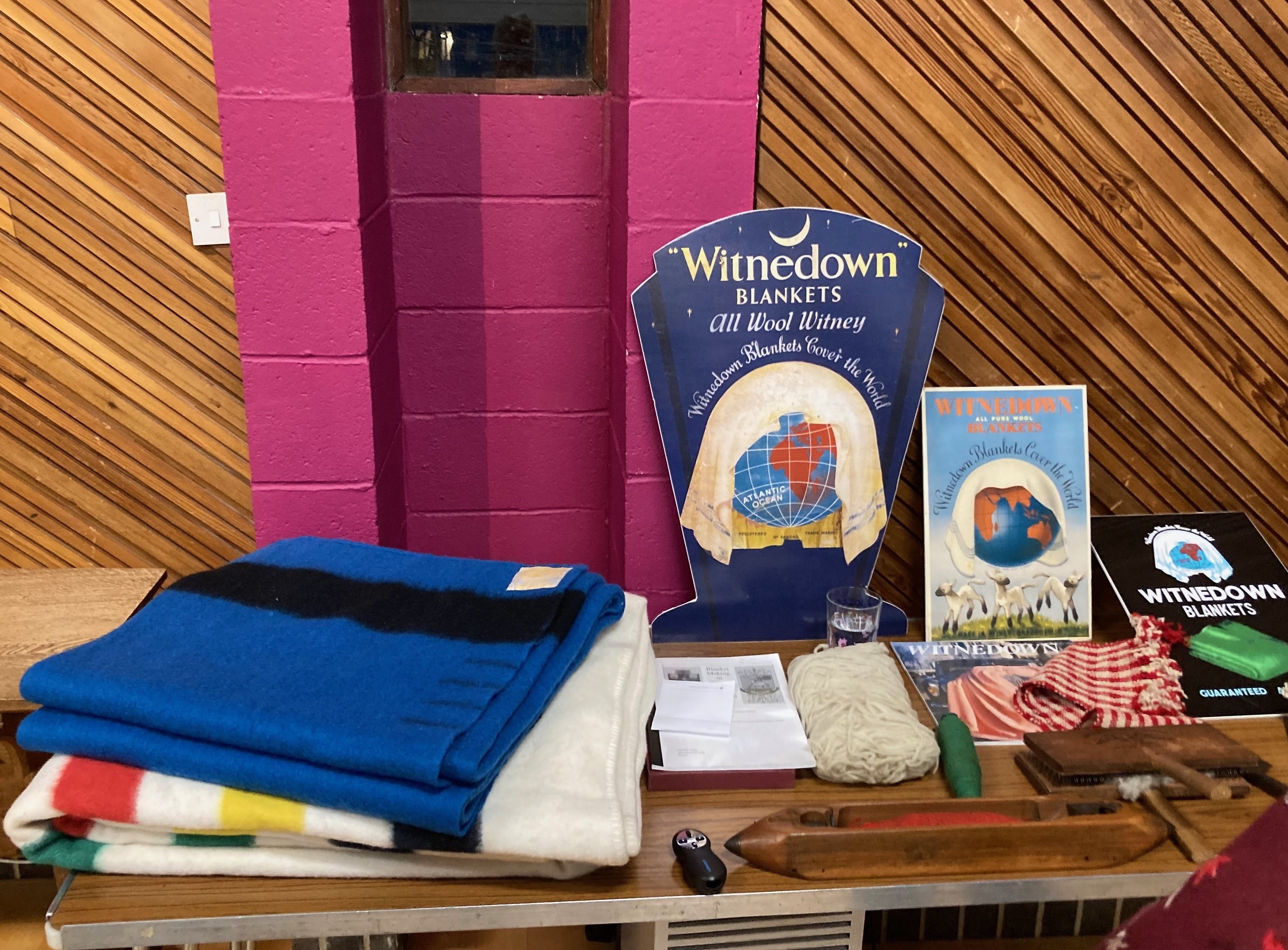
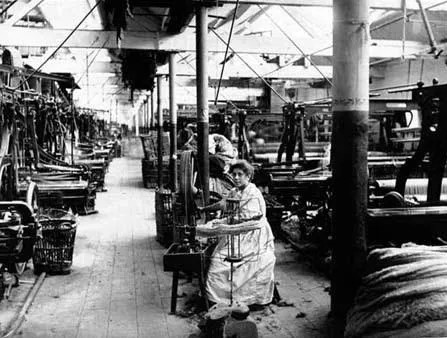
He explained the importance of Witney’s location on the edge of the Cotswold with an abundance of locally farmed sheep and the Windrush used to power the mills and clean the fleeces.
The Romans introduced into the area, the sheep from which the Cotswold Lion sheep is descended. In the Middle Ages Cotswold wool was highly-prize and sought-after across Europe bringing much wealth to the merchants and the ecclesiastical community in the area.
The industry originally started with home weavers making blankets at home, and many factories subsequently grew-up in the town. In later years the two main factories were owned by the Early and Smith families. Their factories started in the 1700s, the families were both Methodist who supported their working communities.
One of the reasons Witney blankets became famous across the world was the importance placed on producing a quality product, all blankets were weighed and measured to ensure they met exacting standards. Witney blankets were famously traded by the Hudson’s Bay Company with Native Americans, the Witney Point blanket being synonymous with quality.
The cloth industry dominated life in the town in the 17th century with many hundreds of people involved in the industry until the mid 20th century. In 2002 the final factory closed; our preference for Duvets made the UK based blanket industry obsolete.
Jonathan also showed a fascinating film from the 1920s, produced by Smith’s and recorded at their mills in Witney and Crawley. The film demonstrated the wool processing, spinning, weaving, cleaning, drying, and shrinking processes. The workers depicted obviously relished the opportunity to be filmed; dressed in their Sunday best with fresh ‘hair-dos’!
The talk was very well attended by our group members, together with many additional visitors.
February
Saddlery & Leather by Ken Langford & Suzie Fletcher
Our February talk was a special date in all our diaries which we were looking forward to very much. We were not disappointed.
Our own history group member Ken Langford together with his prodigy Suzie Fletcher, regaled us with many stories of their time working together in Ken’s local saddlery business, and Suzie also talked about some of the favourite objects she has worked on.
Suzie is a master saddler and leather expert on the much loved BBC TV series ‘Repair Shop’. Growing up in Witney, she talked about her love of leatherwork & saddles which initially came from a childhood love of horses. She met Ken in the 1970s, as a 14 year old, when she visiting his workshop with an old broken saddle, he encouraged her to take it apart herself and try putting it back together again; and fostered her interest in working with and caring for leather. Firstly encouraging her to train in London, she then returned to become his apprentice. Suzie then spent 20 years in the USA honing her craft before returning to the UK and joining the Repair Shop team 10 years ago.

Ken & Suzie have had a lasting friendship for over 40 years and the affection and esteem they hold for each other’s craft and skills was very apparent to everyone in the hall. On display was a wide selection of tools used in leather working, beautiful objects in their own right.
The talk was very well attended by our group members, together with 17 additional visitors. Suzie very kindly did not want a speaker’s fee so a small donation was made to Sobell House on her behalf to thank her for finding time to come to talk to our group.


